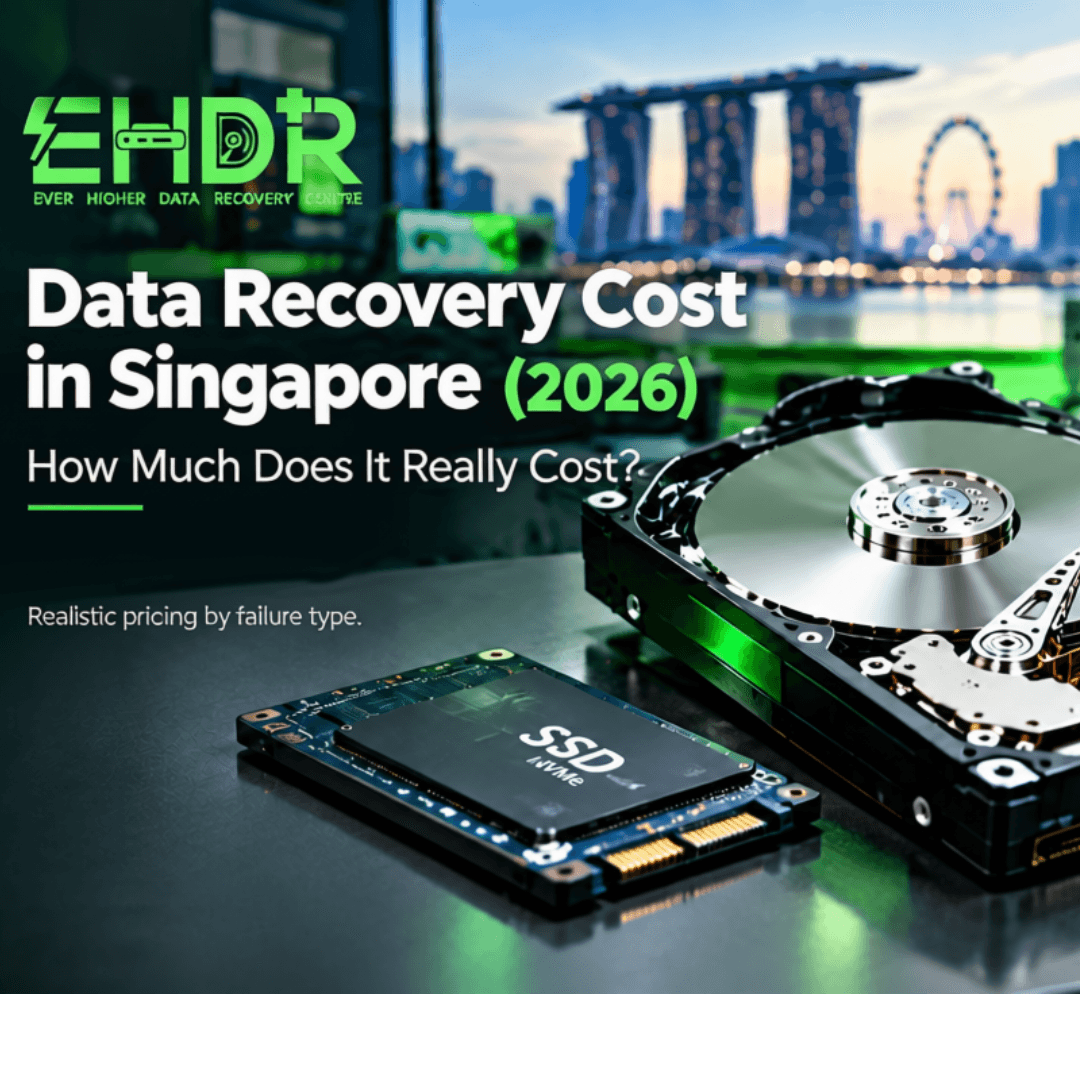
This guide breaks down realistic 2026 pricing by scenario so an owner can get a range of fees before committing a drive to a vendor for assessment.
Why "How Much Does It Cost" Doesn't Have a Single Answer
Every data recovery quote is really a diagnosis of where in the storage stack the failure occurred. Three failures on the same 4TB drive can produce three wildly different invoices:
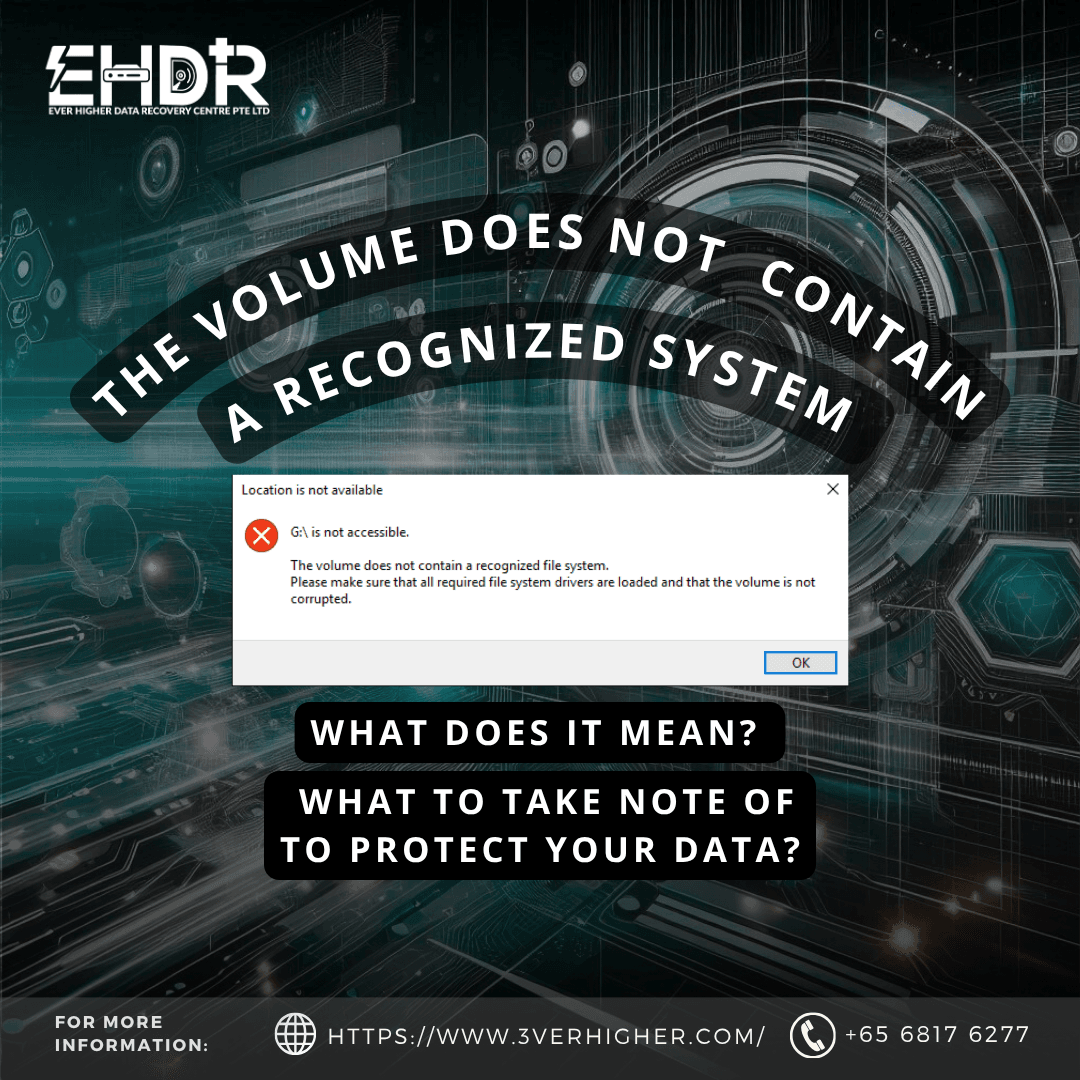
- Logical failure: The drive's electronics and mechanics are healthy, but the file system, partition table, or NTFS/APFS metadata is corrupted. This is software-only work.
- Firmware failure: The drive spins up but isn't recognized correctly, or reports the wrong capacity. This requires vendor-specific firmware tools and a technician who understands that drive family's service area layout.
- Physical or mechanical failure: clicking, grinding, or a dead PCB. This requires a cleanroom, donor parts matched to the exact drive model and firmware revision, and either a head swap or a platter transplant.
2026 Singapore Pricing by Scenario
| Failure Type | Typical Cost Range (SGD) | Technical Notes |
|---|---|---|
| Deleted files / accidental formatting | $280 – $580 | No disassembly. Success drops sharply if new data are saved to the drive after the deletion. |
| HDD firmware corruption (drive not recognized, wrong capacity shown) | $680 – $980 | Needs a serial/UART interface to the drive's service area. |
| HDD mechanical failure (clicking, seized spindle, head crash) | $780 – $1,880 | Requires cleanroom head swap using a donor drive matched by model number, firmware, and PCB revision. |
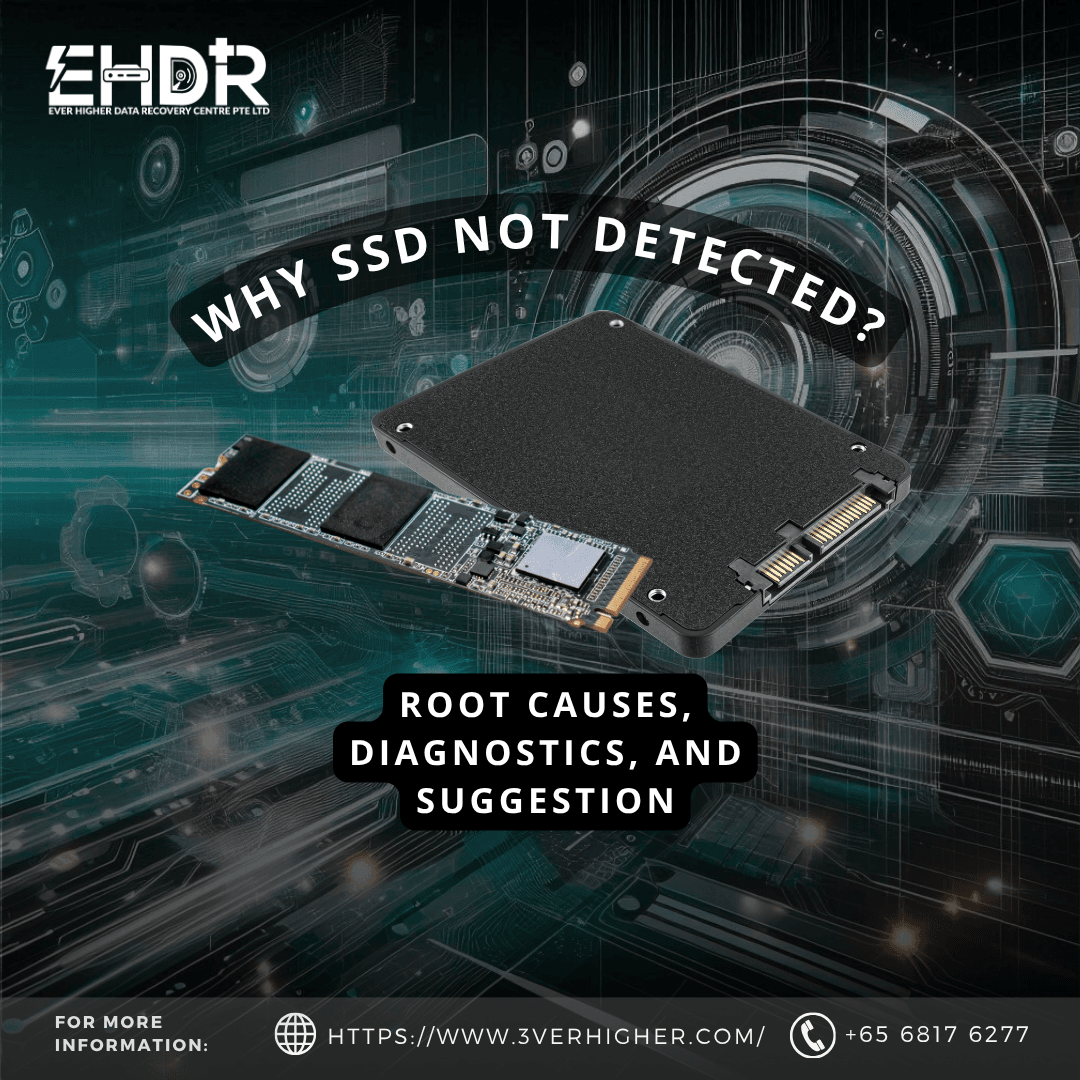
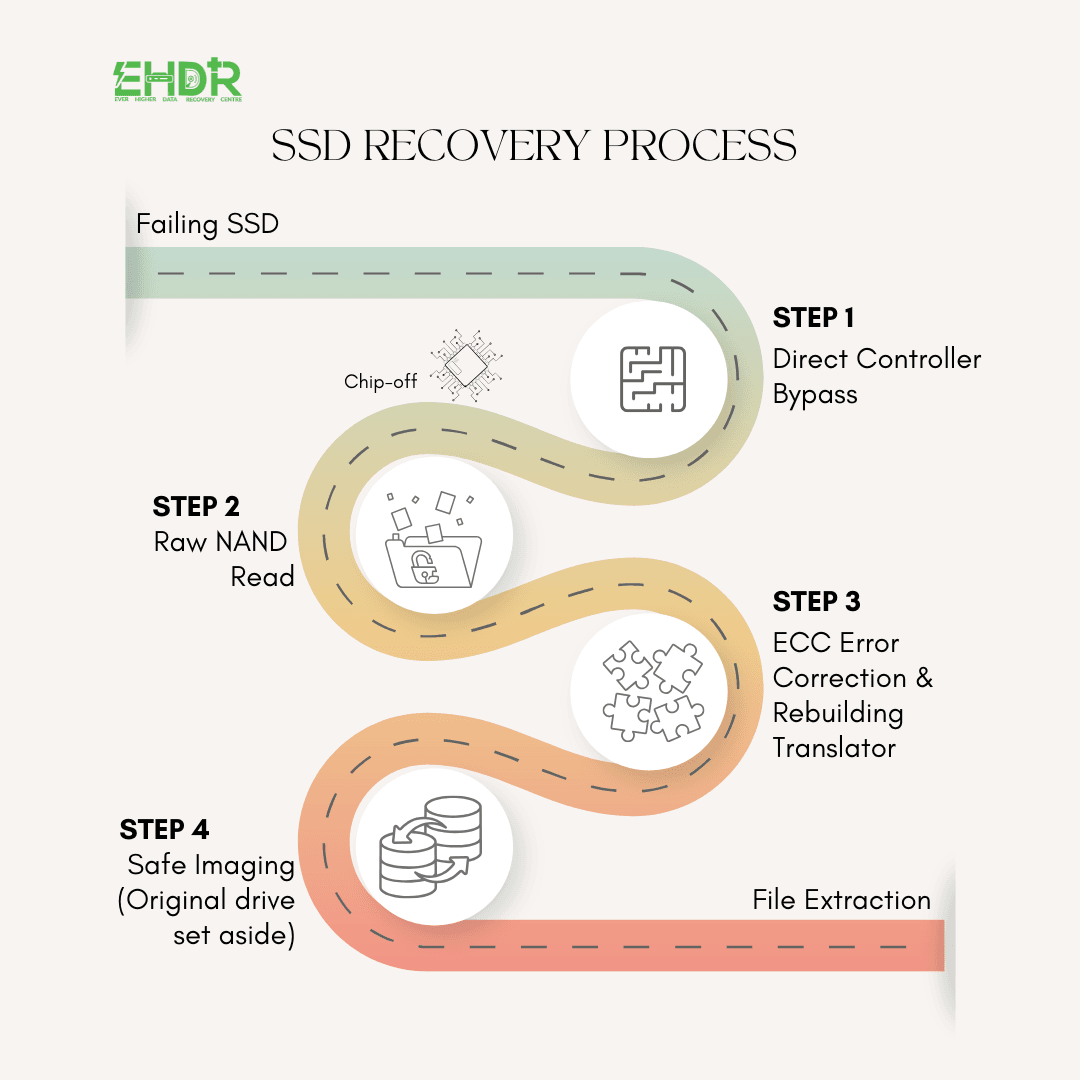
| SSD/NVMe controller level failure | $680 – $2,480 | SSDs use wear leveling and TRIM, so the physical to logical block mapping is destroyed on failure. Recovery often requires reading raw NAND via a chip off method. |
| Logical failure of RAID (Server & NAS) | $580+ | Cost scales with the number of logically failed member drives and the complexity of rebuilding the array's parity and stripe order. |
| Physical failure of RAID (Server & NAS) | $1,000+ | Cost scales with the number of physically failed member drives and whether the RAID controller's stripe size and parity order must be reverse engineered. |
What Actually Drives the Price Up
- Donor part availability. A head swap recovery isn't just labor, it requires a matching donor drive of the exact same model number and often the same firmware revision. Firmware is a crucial factor to consider, because even with the same model number, you won't always get the same firmware version. Enterprise helium-sealed drives (Seagate Exos, WD Ultrastar) or older SAS drives can add several hundred dollars, because the donor itself has to be sourced and, for helium drives, refilled in a sealed environment.
- Number of drives in the array. RAID recovery cost is not priced per array. It is driven by how many member drives have physically failed. A RAID 5 with one degraded drive and no physical damage is a moderate logical rebuild. A RAID 5 with two failed member drives, past the parity threshold, requires physically recovering each failed drive independently before the array can even be reconstructed. This is where the rate increases sharply.
- NAND chip-off recovery for SSDs. When an SSD's controller fails but the NAND chips themselves are intact, recovery requires desoldering each NAND chip and reading it on a specialized reader, then manually reconstructing the flash translation layer (FTL) mapping. This is a process with no standardized tooling across controller vendors, and it is consistently the most labor-intensive and expensive SSD recovery scenario.
Questions to Ask Before Accepting a Quote
- Does any diagnostic fee apply? If yes, will it be waived or credited if I proceed with the recovery?
- Is there a non-refundable fee regardless of outcome?
- Is the quoted fee fixed, or will there be any add-on fee during the recovery?
- What's the success rate specifically for this failure type on this drive model, not a general company success rate?
Bottom Line
Every case is different, and the only way to know your exact cost is a proper diagnosis of where in the storage stack the failure occurred. The ranges above reflect market rates across Singapore, not a fixed EHDR price list, so treat them as a starting point for budgeting rather than the number you'll pay.
At EHDR, our engineers assess your drive in our own lab in Singapore and give you a clear breakdown of what failed and what it will cost before any recovery work begins. If you are dealing with a failed drive, a degraded RAID array, or a NAS that will not mount, feel free to contact us for an advice.